Nature and seasons · 10 min read
Kalbarri wildflowers
August to October is the honest peak, not a guarantee — how to use visitor-centre reports, stay on tracks, and treat spider orchids and grevilleas as examples rather than a checklist.
Editorial desk · Updated 2026-09-18
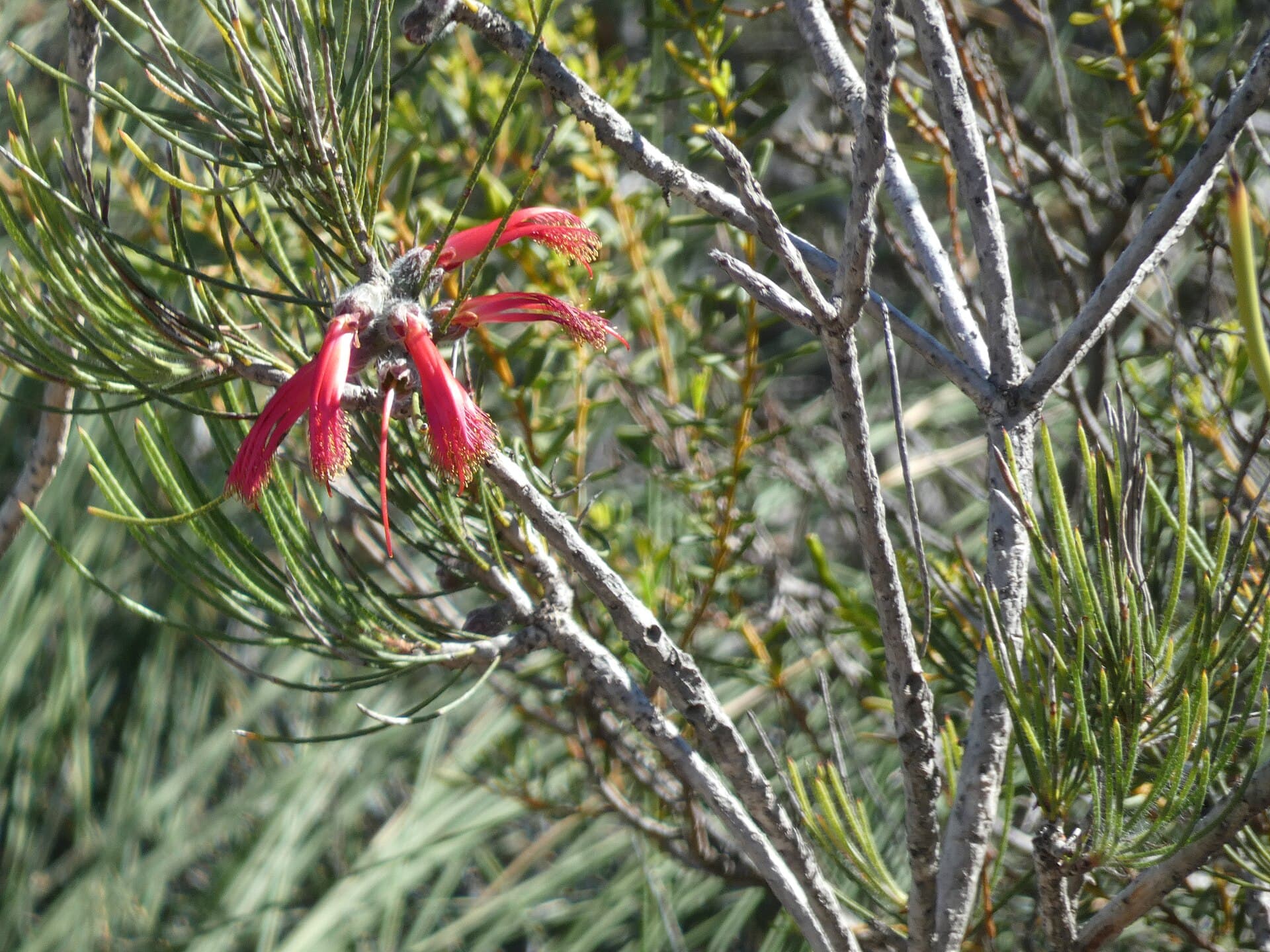
Photo: Findlay Osborn · CC BY-SA 4.0 · Wikimedia Commons. Source file · CC BY-SA 4.0

Findlay Osborn · CC BY-SA 4.0
Home / Visitor guides / Nature and seasons
Kalbarri in late winter can look, from a moving car, like a dull green heath. Then you stop, and the green resolves into a spider orchid in the shade of a shrub, a grevillea on a gravel shoulder, colour that was invisible at a hundred kilometres an hour. It is not a botanical garden and not a guarantee. It is a season on Nanda Country that rewards people who get out of the vehicle and stay on the path.
This journal is not Parks and Wildlife. Timing shifts with rain. Check Explore Parks WA and DBCA alerts before you drive inland. Inland gorge sites use a standard WA park pass — last-checked $17 a standard vehicle, $10 concession. Coastal lookouts are generally free. Details sit in the fees guide. The park covers about 186,000 hectares, 590 kilometres north of Perth. No dogs, no park water, no casual camping. Western Shield 1080 baits are laid here.
August to October is the peak, not a contract
If you can move your week, move it into August, September or October. That is the window most visitors will actually see a show worth the drive. July can be starting. November can be finishing in the cooler pockets. A wet winter can thicken the display. A dry one can leave you looking at good shrubs and not much else. Anyone who sells you a guaranteed “best week” from a desk in another city is guessing with your fuel.
Peak does not mean every species at once. Some orchids finish before the grevilleas hit their stride. Treat “August to October” as the season you plan around, then use the Kalbarri Visitor Centre for the week you have. Desk staff see what is out on the Loop road and the coastal heath that morning. Ask them. Do not argue because an app said something else.
The best time to visit piece covers heat, wind and whales as well as flowers. Flower season is also still gorge season. The Loop’s summer start rule is a summer problem, but a warm October inland day can still cook you. There is no drinking water in the park. Carry it. The flowers are not a reason to skip the bottle.
Examples, not a complete list
You will see lists. This journal is not going to add another one that pretends to be complete. Kalbarri’s flora is too large for a visitor page to inventory without lying by omission. Two names are enough to train your eye.
Spider orchids — the ones with the long, pale, slightly unnerving petals — are the photograph people send home because they look unlike a garden flower. They are often small. They are often just off the path, which is not an invitation to step off it. One plant, left alone, can be there for the next car. A dozen people circling it for a closer phone shot will not.
Grevilleas are the other useful example: shrubs that read from a standing position, sometimes spectacular along a verge you would have ignored. Between those two habits of looking — down for the orchid, across for the shrub — you will notice a dozen other things we will not name. Learn a few if you enjoy it. Do not turn the walk into a ticking exercise. If you want photographs rather than names, the photography guide is the companion. Kneel on the path. Do not flatten the surrounding plants.
Where visitors actually see them
You do not need a secret track. You need the tracks you were already going to walk, used slowly.
The inland approaches to Nature’s Window, the Skywalk — kaju yatka — and Z-Bend run through plateau country that flowers when the season is kind. You paid for those roads anyway if you came for the gorge; see inland gorges. Walk the short lookouts first. Save the nine-kilometre Loop for a cool morning with a water plan, not for a flower dash in the heat.
The coastal heath along George Grey Drive is the other half. Red Bluff, Rainbow Valley, Eagle Gorge and the Bigurda country toward Natural Bridge can be as good as the inland verge, with a sea wind as the soundtrack. Those lookouts are generally free. The coastal cliffs guide will keep you on the right side of the surge question while you look at shrubs instead of stacks.
Meanarra Hill above town is a short climb — about 300 metres of walking to a 207-metre lookout — and a decent first-evening check on whether the season has started. It is a park lookout; expect an inland-style fee unless official signage says otherwise, and verify it. The Malleefowl loop on that hill is a longer way to be among the same vegetation.
Road verges outside the park can be excellent. They are also road verges. Park legally. Do not stop on a crest. Do not let children spill into the Brand Highway because a wreath flower was photogenic. The park boundary is not the edge of courtesy.
Hutt Lagoon is not a wildflower site and not in the national park. Lucky Bay is a camping area outside the park. If your itinerary blurs pink lake, beach camp and orchid hunt into one unexamined loop, you will spend the day in the car.
Stay on the tracks
This is the only rule that matters more than timing. A single pair of boots beside a spider orchid becomes a pad, then a braid, then a blowout that does not recover before the next August. Stay on formed tracks. If the flower is three metres off the trail, that is why you have a zoom.
Do not pick, dig, or “thin” a clump so the remaining stem looks better. Children can look without collecting. Adults who want the cleaner frame are usually the ones who do the damage.
The same tracks are wildlife habitat. Kangaroos use the verges at dusk. Drive as if a large animal is about to step onto the bitumen. The wildlife notes cover that duty. Pets are banned, including inside vehicles. Leave the dog in town.
Use the visitor centre like a field desk
The Kalbarri Visitor Centre is the live report. Ask what is out and what has gone over. Then go to one or two of those places and walk slowly, instead of hitting every name on a photocopied list.
Buy or pick up a paper map while you are there. Reception dies. Offline maps help; a marked park map helps more when you are trying to remember which stub you already did. Passes for the inland sites are sold through official channels and some local outlets. We do not sell them. If a desk implies this journal is a ticket office, walk away.
The park phone is 08 9937 1140. Use it for department questions, not for a species identification argument. For a whole-park frame, the visitor guide still comes first. For Country and the names on the signs, Nanda Country. We do not invent plant lore or ceremony to decorate a flower piece.
A sane flower day
Start early. Do one inland lookout road while it is cool — Skywalk and a slow Window approach is plenty. Spend the afternoon on the coastal heath if the wind is kind. Finish at Meanarra or Red Bluff if you still want a view. Drink the water you carried. Sleep in town.
If the season is thin, you still had the gorge and the cliffs. That is the advantage of Kalbarri over a destination that is only flowers. If the season is thick, resist the urge to walk into it. The show is the reward for the people who stay on the path, including the ones who arrive next week.
Verify fees and alerts before you leave the bitumen. The wildflowers will not mind waiting an extra ten minutes on the official page. The heat and the closed gate will not wait for you.
Frequently asked questions
- When do wildflowers peak in Kalbarri National Park?
- The honest peak for most visitors is August to October, after winter rain and before the plateau cooks. Individual species run earlier or later, and a dry year can thin the show. Ask the Kalbarri Visitor Centre the week you travel, and verify park alerts on Explore Parks WA.
- Where should you go to see flowers in the park?
- Start with formed roadsides and short lookout walks you were already doing — Meanarra, the inland gorge approaches, the coastal heath on the way to Eagle Gorge and Natural Bridge. Stay on tracks. Do not braid new pads through the shrubs for a closer orchid.
- Can you pick wildflowers in Kalbarri National Park?
- No. Leave them. A picked spider orchid is a vanished plant, not a souvenir. Photograph from the path. Confirm current rules on the official park page if you are in any doubt.